The Ivy's long journey to Newcastle
Six years after its first Newcastle proposal, the group is preparing two restaurants in a former bank.

Listen to this article
Listen to this article
Read by an AI voice.
In March 2020, The Ivy had its sights on a building on Newcastle's Grey Street. The restaurant group applied to turn 104–108 Grey Street, then occupied by burger chain Byron, into a three-floor brasserie. The plans were subsequently shelved. By December 2021, fashion retailer END. Clothing had opened a flagship store at the address instead.
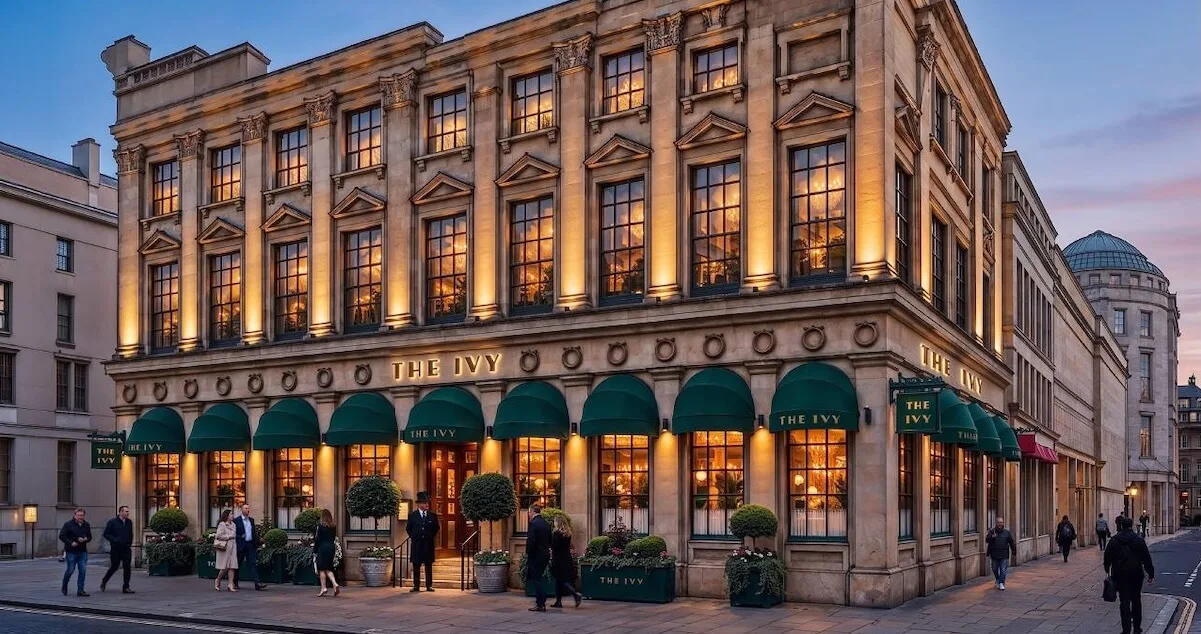
Now The Ivy is preparing to open two restaurants next door. The Ivy Newcastle Brasserie and The Ivy Asia Newcastle are planned for the former Lloyds Bank building at 102 Grey Street, with an opening expected before the end of 2026. It is a return to a street the operator was considering six years ago, although the reason the earlier project was dropped has not been established.
The original Ivy, on West Street in London's theatre district, opened in 1917. It developed a reputation as a haunt of actors, artists and prominent London diners, with the kind of name recognition that most restaurant businesses spend years trying to acquire.
For decades there was only one. Restaurateur Richard Caring later saw the possibility of turning that reputation into a national business. In a 2018 interview with Restaurant magazine, he recalled asking himself, “I woke up one day and asked why is there only one Ivy?”
The first offshoot, The Ivy Market Grill, opened in Covent Garden in 2014. Brasseries and cafés followed across Britain, taking elements of the West End restaurant's identity into larger, more accessible all-day venues. The operation is built around familiar menus and service, but each restaurant also has its own interior and a carefully chosen address.
Troia (UK) Restaurants Limited, the operator behind The Ivy Collection, reported turnover of £348m for the 52 weeks to 4 January 2026, up from £327.1m a year earlier. Pre-tax profit was £40m. In 2026, Abu Dhabi-based investor DIAFA acquired a majority stake in a wider collection of Richard Caring's hospitality businesses, including The Ivy Collection, in a transaction valued at approximately £1.4bn. Caring remains executive chairman.
The Newcastle building follows a property preference Caring described years before this opening. In the same 2018 interview, he observed that high-street banks were closing and said they “normally have the best sites”. Other Ivy restaurants occupy former banks, including Liverpool's former Bank of England premises and Glasgow's former City of Glasgow Bank.
Newcastle's building has a longer history than the restaurant brand. Built around 1839 as part of Richard Grainger's redevelopment of the city centre, it occupies a prominent position at the junction of Grey Street, Market Street and Hood Street. Historic England lists it at Grade II*, a higher category of protection than Grade II.
Its tall arched windows and imposing stone frontage were designed for banking, but they also provide a setting for hospitality. Designer Adam Ellis has developed separate interiors for the two restaurants. The brasserie is planned with green onyx and bespoke wallpaper, while Ivy Asia will have glowing agate floors and ornate ceilings.
Kate Cooper, The Ivy Collection's restaurant operating officer for the North, said: “Finding the right location in the heart of the city was incredibly important to us.”
The plan brings two concepts under one roof, each pitched at a different dining occasion. The brasserie will serve breakfast, lunch and dinner, while Ivy Asia will offer Asian-inspired dishes, sushi and a more theatrical setting.
Between them, the restaurants are expected to seat more than 200 guests. The operator says the opening will create 200 jobs across the region, including management and service roles, although it has not published a breakdown of full-time and part-time posts. The value of the fit-out and the terms of the property agreement have not been disclosed.
The proposals also involve work to a protected building. Listed-building consent and a separate application for external alterations were still awaiting decisions in publicly available records checked in October. Plans include a new entrance on Hood Street, window changes, canopies and signage.
The opening will bring a national restaurant operator and two formats to one of Newcastle's best-known commercial streets. It is a specific investment in the existing city centre, but the group's financial commitment to the site has not been disclosed.
The first premises The Ivy wanted are now a fashion store. Six years on, a nineteenth-century bank next door is being prepared to welcome diners. A firm opening date has yet to be announced.
THE BRIEFING
The North East economy, every Thursday at 9am. Free.
Read our privacy notice.